HOHANK INTERNATIONAL GEN LATAM

High altitude mine generator selection

High altitude mine generator selection

For high altitude, high temperature, dust, rain and open-pit mine environments, review the derating, heat dissipation, air filtration, installation ventilation, maintenance cycle and power margin of diesel generators.

High altitude mine generator selection

High altitude generator derating

High altitudes, temperatures and operating conditions can reduce available engine power. Andean mines must review capacity before quoting.

Scene background

Mines in the Andes cannot select generators based solely on plain power.

Many mining areas in Ecuador and the Andes have high altitudes, long roads, and large temperature differences between day and night. After the equipment arrives on site, it often has to face dust, rainy seasons, limited ventilation, and long-term operation. The power on the nameplate of the generator set is usually calibrated under standard conditions and cannot be directly equated to the long-term output power at the mining site.

If customers only use the equipment power meter to make purchasing decisions, it is easy to ignore the impact of altitude, temperature and heat dissipation conditions on engine output. After arriving at the site, the unit may seem large enough, but when it is actually loaded, it may experience temperature rise, alarm, load reduction, or difficulty in starting.
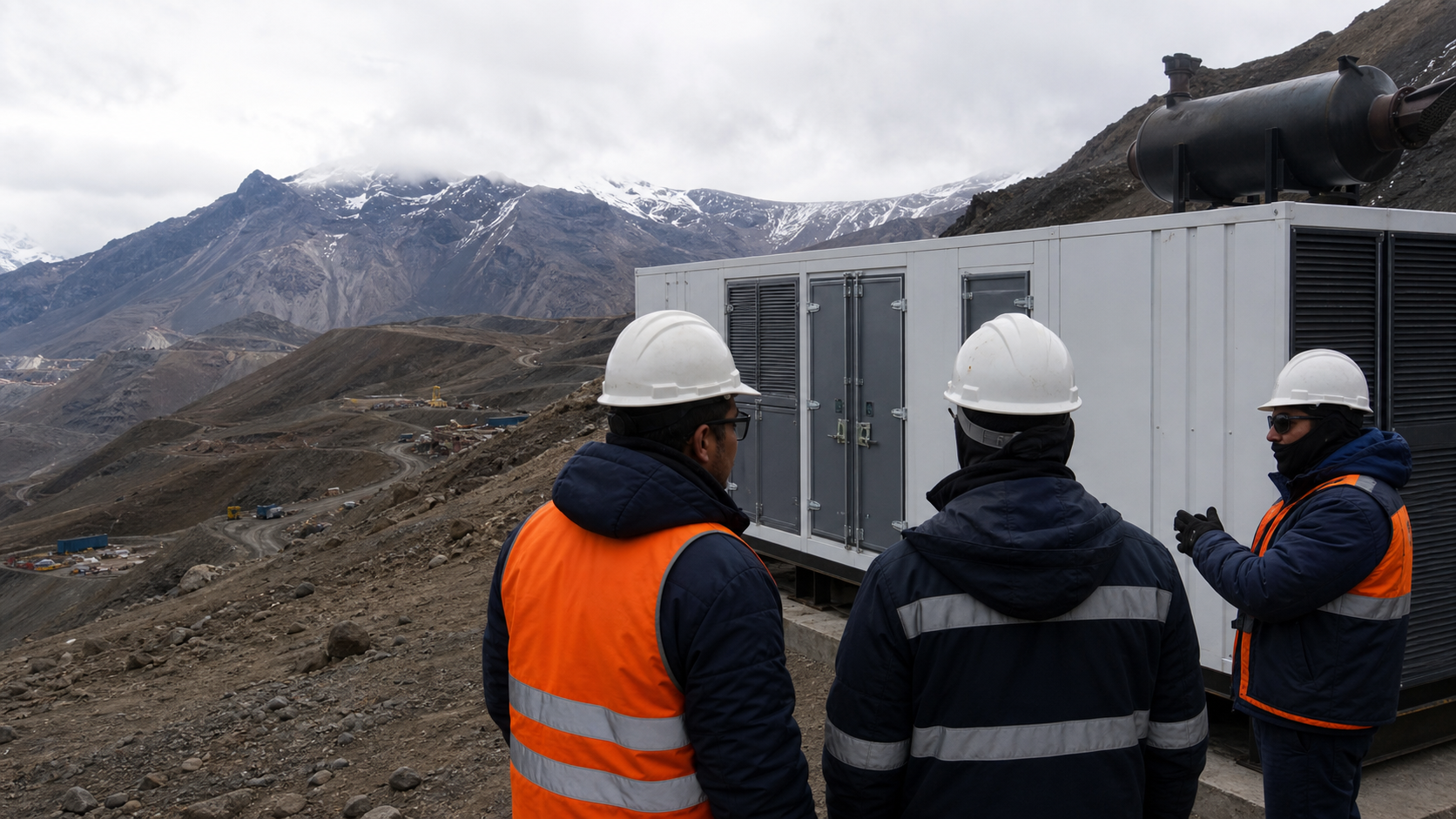

Onsite issues

The book capacity is sufficient, but the load is unstable at high altitude sites.

A common problem in high-altitude mining areas is that the generator set can cover crushing, pumping station or camp loads on the quotation sheet, but in actual operation, the temperature rises when the load is increased, or it cannot continue to output during the day when the temperature is high, the dust is heavy, and the ventilation is poor.

This kind of problem is not necessarily a problem of equipment quality, but rather a failure to review the site altitude, temperature, air intake and exhaust conditions, continuous operating hours and startup shock when selecting the equipment. Especially for production expansion projects, the margin originally reserved after adding new equipment will be quickly eaten up.

High-altitude mine generator selection and on-site problem scenarios

The impact of not processing

Insufficient power will lead to repeated load reduction, alarm and shutdown waiting

If the high-altitude derating review is not carried out in advance, the mine may find that the unit cannot carry the full load as expected only after it is put into operation. The only way to temporarily reduce the simultaneous operation of equipment on site is to wait repeatedly for the unit to cool down, clean the filter element, and check the water tank and heat dissipation channel.

Long-term operation close to the limit will also increase maintenance pressure. Filter elements, water tanks, belts, sensors and cooling systems are more likely to expose problems. During subsequent expansion of production, you may have to re-select models, replace units or add parallel machines for expansion, which increases time and cost.

Recommended configuration

First review the environment and then determine the capacity margin and heat dissipation configuration.

The power supply scheme for high-altitude mines should first review the installation altitude, maximum ambient temperature, dust, ventilation, machine room or container layout, and then determine the available capacity based on continuous load, starting load and daily operating hours.

The configuration is not just about simply increasing the generator power, but also confirming the engine derating coefficient, cooling system, air intake and exhaust direction, air filtration, maintenance cycle and spare parts range. If necessary, compare a single mainframe, multiple parallel machines, and reserved expansion interfaces.

Configuration confirmation steps

Altitude, load and on-site installation conditions should be confirmed together

The first step is to confirm the mining area’s altitude, maximum temperature, dust, rainy season and unit installation location to determine whether there is insufficient ventilation, hot air backflow or insufficient maintenance space.

The second step is to sort out the continuous operating load, starting impact load, critical power load and daily operating hours, and calculate the difference between standard power and on-site available power.

The third step is to confirm the capacity margin based on the subsequent expansion plan, whether parallel reservation is needed, what cooling and filtration enhancements are needed, and what maintenance cycles on-site personnel should follow to check the filter element, water tank, and alarm records.

Onsite income

Let the mine know how much load the equipment can really carry after it arrives at the site.

After high-altitude review, the purchaser no longer only looks at the rated power on the quotation sheet, but can know the usable range of this power generation system under on-site working conditions in the mining area. It will be clearer which loads can be run at the same time, which loads need to be started at off-peak times, and how much margin is left for subsequent expansion.

The goal is to reduce load shedding, alarms and temporary remedies after commissioning, and to adapt the generator set, power distribution, cooling, maintenance and spare parts plans to the real operating conditions of Andean mines from the outset.

Check before quotation

Common signals on site

  • The mining area is at a higher altitude
  • The unit is overheated or unable to reach the expected load
  • The temperature is high and the dust is heavy during the day
  • The original selection did not consider the derating margin.

If you don’t plan ahead

  • A unit with sufficient book capacity may not actually carry enough load when it arrives at the site.
  • High temperature, high altitude and dust will increase the risk of overheating, alarm and load reduction
  • Temporarily increasing the load will cause the unit to operate close to the limit for a long time.
  • The maintenance cycle is performed according to the normal environment, and problems with the filter element, heat dissipation and water tank are exposed more quickly.
  • There is insufficient capacity margin during subsequent expansion, and it is still necessary to re-select or expand in parallel.

Project confirmation points

  • Mining area altitude, daytime temperature, dust, ventilation and unit installation methods
  • Continuous operating load, starting shock load and daily operating hours
  • Derating factors of engines, generators, and cooling systems under local operating conditions
  • Existing units are overheated, alarmed, unable to load or have maintenance records
  • Subsequent expansion of load and whether multi-machine parallel interfaces need to be reserved

Recommended configuration range

  • Recheck altitude and ambient temperature
  • Calculate engine derating and cooling margin
  • Increase capacity or plan multiple machines in parallel
  • Check ventilation, filtration and tank cooling
  • Develop harsh environment maintenance cycles

Engineer assistance

Contact the engineer first, and then determine the equipment and service scope together

Is the calibrated power of the unit still sufficient under the on-site altitude, temperature, dust and ventilation conditions?

Device and module scope

Diesel generator sets that have been reviewed for high-altitude derating, enhanced heat dissipation and filtration, ventilation installation requirements, maintenance cycles and capacity margins.

Engineers will help you sort out the information

  • Installation altitude and maximum ambient temperature
  • Dust, rainwater, ventilation and machine room conditions
  • Continuous load, starting load and operating hours
  • Existing units are overheated, alarmed or unable to load records

Related equipment and services

High altitude capacity reviewCooling system inspectionAir filter maintenanceCapacity marginHard environment spare parts

Engineer contact

Contact the engineer first and let the engineer help you determine the configuration.

If the information is incomplete, you can contact us first. You only need to first explain the location of the mining area, on-site problems or general equipment conditions, and the engineer will work with you to sort out the load, site conditions and configuration range.

Scan the WhatsApp code to contact the engineer

Engineers will contact you soon to understand your questions and needs.

Scan the WhatsApp code to contact the engineer
or leave your contact information

Engineers will contact you soon to understand your questions and needs.

Contact engineer service