HOHANK INTERNATIONAL GEN LATAM

Off-grid mine power supply solution

Off-grid mine power supply solution

In view of the instability of the mining area power grid, power restrictions, blackouts and weak power grid problems, review the main diesel power generation system, backup power supply, ATS automatic switching, key load zoning and continuous production power supply solutions.

Off-grid mine power supply solution

How can a remote mine without a stable grid restore continuous power for production?

In remote mines where the mains power drops frequently, the access distance is long, or the voltage fluctuates significantly, it is necessary to plan the main diesel power generation, ATS switching and load zoning as a continuous production system to avoid simultaneous shutdown of crushing, drainage, maintenance workshops and camps.

Scene background

The mining area is far from a stable power grid, and the production load requires reliable main power supply.

Many remote mining areas are far from stable power grid access points. Even if they are connected to the mains power, they may still encounter frequent power outages, power cuts or voltage fluctuations. The on-site crushing, conveying, pumping stations, maintenance workshops and accommodation camps all rely on continuous power supply, and a single voltage abnormality may affect the rhythm of the entire site.

If the generator is only used as a single point backup on site and lacks main power supply range, ATS switching logic and load zoning, production load, domestic load and safety load will easily drag each other down in the same power grid fluctuation.
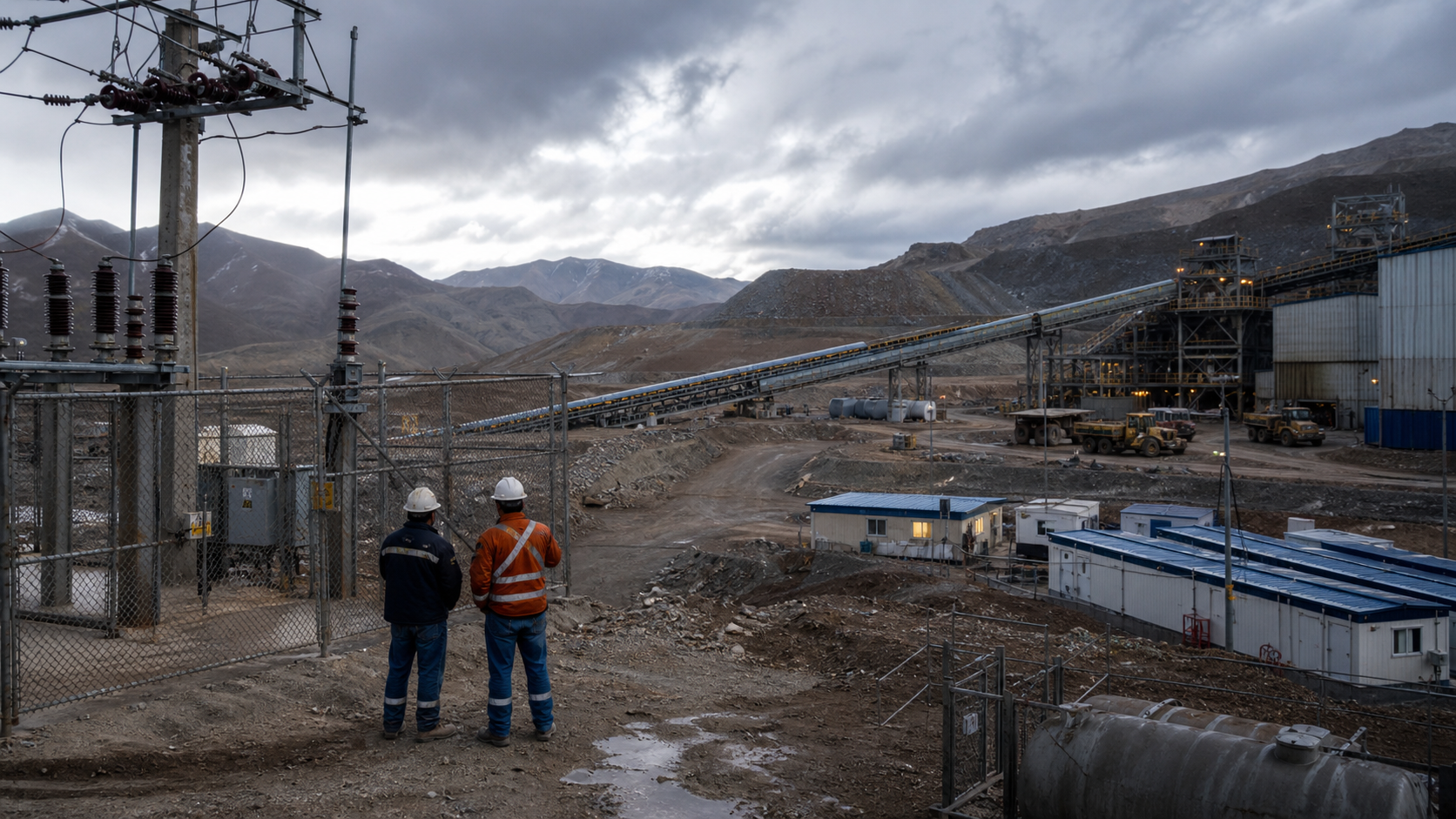

Onsite issues

When the voltage fluctuates, the production load and the daily load are stopped together.

The most obvious problem on site is not the lack of a generator, but the lack of a power supply system that can prioritize loads. When the crushing line starts up, the voltage drops, and camp lighting and communications will also be affected; when the mains power is interrupted, water pumps, maintenance workshops, and camp loads scramble for spare capacity at the same time.

Onsite personnel can only rely on manual switching and temporary shutdown of some equipment to maintain operation. Every time there is a power outage, it is necessary to re-confirm the load, arrange the startup sequence, and then wait for the equipment to stabilize. The production plan is interrupted by power problems.

Off-grid mine power supply solution on-site problem scenario

The impact of not processing

Power problems turn into production outages, drainage risks and personnel waiting costs

The direct consequence of ignoring this problem is that crushing, conveying, drainage, workshops and camps may lose power at the same time during the same voltage fluctuation. Stopping the crushing line will affect on-shift production, stopping the drainage pump will increase the risk of water accumulation during the rainy season, and power outages in the maintenance workshop will slow down equipment recovery.

A more hidden loss is management cost. The mining team needs to repeatedly coordinate which loads are turned on first and which loads are temporarily stopped. On-site electricians deal with emergency switching for a long time. When purchasing equipment, it is also difficult to determine how big a unit to buy.

Recommended configuration

Use the main power generation system to take over the core load and use the mains power as a switchable input

The power supply system should be upgraded from "temporary emergency during power outage" to "main power supply solution". Core configurations include containerized diesel generator sets with capacity margin, ATS automatic switching, production/camp/workshop/drainage pump load zoning, and clear start-stop and switching logic.

The focus of this design is not to simply increase the power generation capacity, but to let the system know which loads must be protected first, which loads can be delayed in starting, and which loads need to be smoothly switched back after the mains power is restored.

Configuration confirmation steps

Load review, switching logic and running relationship synchronization planning

In the first step, collect the on-site equipment list, motor power, starting method, voltage frequency, daily operating time and altitude, and distinguish between continuous load, starting shock load and critical backup load.

The second step is to re-divide the low-voltage distribution circuits according to production areas, camp areas, maintenance workshops and drainage systems to determine the ATS switching range and key load priorities. Crusher, pump equipment and high-power workshop equipment are no longer mixed with the domestic load in the same temporary circuit.

The third step is to confirm the operating relationship between the main, backup and mains inputs. The mining team can clearly know which loads are guaranteed by the main unit, which loads need to be started in a delayed manner, and which loads will be switched back after the mains power is restored.

Onsite income

Power outage no longer causes the entire site to lose control at the same time. There is a clear relationship between production and electricity use.

The target result after the transformation is that production load, camp load and critical drainage load are clearly grouped. When the mains power is unstable, the main unit can bear the core production and safety loads; after the mains power is restored, ATS and load priority are gradually switched to reduce manual emergency operations.

What the mining team received was not just a quotation for a unit, but an executable description of the power supply relationship: which loads must be prioritized, which loads need to be started with a delay, and what order should be followed when on-site operations occur during power outages, power rationing, and restoration of mains power.

Check before quotation

Common signals on site

  • Mains power drops frequently or there is no reliable access at all
  • Crushing, conveying, pumping stations, workshops and camps share unstable power grids or the same set of backup power supplies
  • The device startup sequence relies on manual experience and lacks stable switching logic.
  • Lack of clear load prioritization during power outages or brownouts

If you don’t plan ahead

  • A mains power fluctuation may cause production, drainage, maintenance and camp loads to lose power at the same time
  • On-site emergency rescue can only rely on manual switching and temporary load shutdown, and the recovery time is uncontrollable.
  • Shutdown of the crushing line will affect the production of the shift, and shutdown of the drainage pump will increase the risk of water accumulation in the rainy season.
  • When purchasing equipment, it is difficult to determine how large a unit to buy, and subsequent modifications are prone to repeated rework.

Project confirmation points

  • Mains power access situation, power outage frequency, voltage fluctuation and power restriction rules in the mining area
  • Production area, camp area, maintenance workshop, drainage pump and safe load list
  • Motor starting method, simultaneous operating loads, daily operating hours and altitude conditions
  • Which loads must be protected with priority, and which loads can be started with delay or temporarily deactivated
  • Whether the existing power distribution cabinets, cables, ATS or manual switching methods meet the requirements for continuous operation?

Recommended configuration range

  • Containerized main diesel generator set
  • ATS automatic switching and critical load prioritization
  • District power distribution in production areas, camp areas, maintenance workshops, and drainage pumps
  • Remote alarm and operating data recording
  • Commissioning support, basic spare parts package and operational handover checklist

Engineer assistance

Contact the engineer first, and then determine the equipment and service scope together

Should the diesel power generation system be used as the main power source in the mining area, or should it only be used as backup for critical loads?

Device and module scope

Main or backup diesel generator set, ATS automatic switching, production/camp/drainage zone power distribution, operational monitoring and basic spare parts package.

Engineers will help you sort out the information

  • Mains power access situation and power outage frequency
  • Production, drainage, workshop and camp load lists
  • The load must be guaranteed and delayed start of the load is allowed
  • Existing low-voltage cabinets, switching cabinets and site photos

Related equipment and services

Containerized diesel generator setATS switchingZone low voltage power distributionRemote alarmSpare parts and commissioning list

Engineer contact

Contact the engineer first and let the engineer help you determine the configuration.

If the information is incomplete, you can contact us first. You only need to first explain the location of the mining area, on-site problems or general equipment conditions, and the engineer will work with you to sort out the load, site conditions and configuration range.

Scan the WhatsApp code to contact the engineer

Engineers will contact you soon to understand your questions and needs.

Scan the WhatsApp code to contact the engineer
or leave your contact information

Engineers will contact you soon to understand your questions and needs.

Contact engineer service