Public services and utility repair teams must reach multiple sites quickly
The vehicle, generator and common connection tools remain mission-ready so a trained team can deploy directly when an incident occurs.
Product Range / Purpose-Built Emergency Power Vehicles
A diesel generator set, output distribution, cable handling, lighting and operator space integrated into a purpose-built vehicle for public emergency response, utility repair and temporary multi-site power. It deploys faster than a trailer, but the load, chassis capacity, vehicle compliance and site connection must be engineered together.
Why Choose a Truck-Mounted Power Station
Its customer value is to turn dispatch, generation, distribution, cable deployment and field operation into one repeatable mission workflow. It is not simply an acoustic generator placed on a truck, nor an oversized trailer.
The vehicle, generator and common connection tools remain mission-ready so a trained team can deploy directly when an incident occurs.
Reduces time spent sourcing a distribution board, moving cables and creating a temporary working area, improving consistency across repeated missions.
If a tow vehicle is already available and dispatch frequency is low, a trailer is often a simpler investment and allows the chassis to be replaced independently.
Chassis, axle load, center of gravity, overall dimensions, brakes, lighting and compliance must be reviewed before the generator configuration is finalized.
Vehicle Configuration Range
Vehicle type is not an appearance grade. It follows required power, equipment weight, cable quantity, crew size, runtime and road conditions.
For telecom, lighting, small pumps and field tools, with priority on rapid arrival, narrow-road access and simple connection.
Integrates the set, output panel, common cables and work lighting for municipal, utility-maintenance and critical-facility transition power.
Supports large pumps, motors and industrial temporary loads, with close review of axle load, airflow, fuel and connection capacity.
Adds quick connections, cable reels, workbench, lighting, monitoring or field-command functions to suit a defined support mission.
Available generator platforms cover a broad rating range, but a standard generator catalog cannot be treated as a complete vehicle offering. Every vehicle must be checked for rating, generator dimensions and weight, axle load, center of gravity, enclosure airflow, cables and personnel space.
Ratings and Engine Platforms
These bands support early project screening rather than define stocked vehicle models. Motor starting, nonlinear loads, altitude and temperature, 50Hz/60Hz and continuous runtime all affect final capacity.
Vehicle Systems and Customer Value
When generation, distribution, cables and safety tools are secured on the vehicle before dispatch, field work can be reduced to parking and isolation, cable deployment and grounding, phase checks and staged energization.
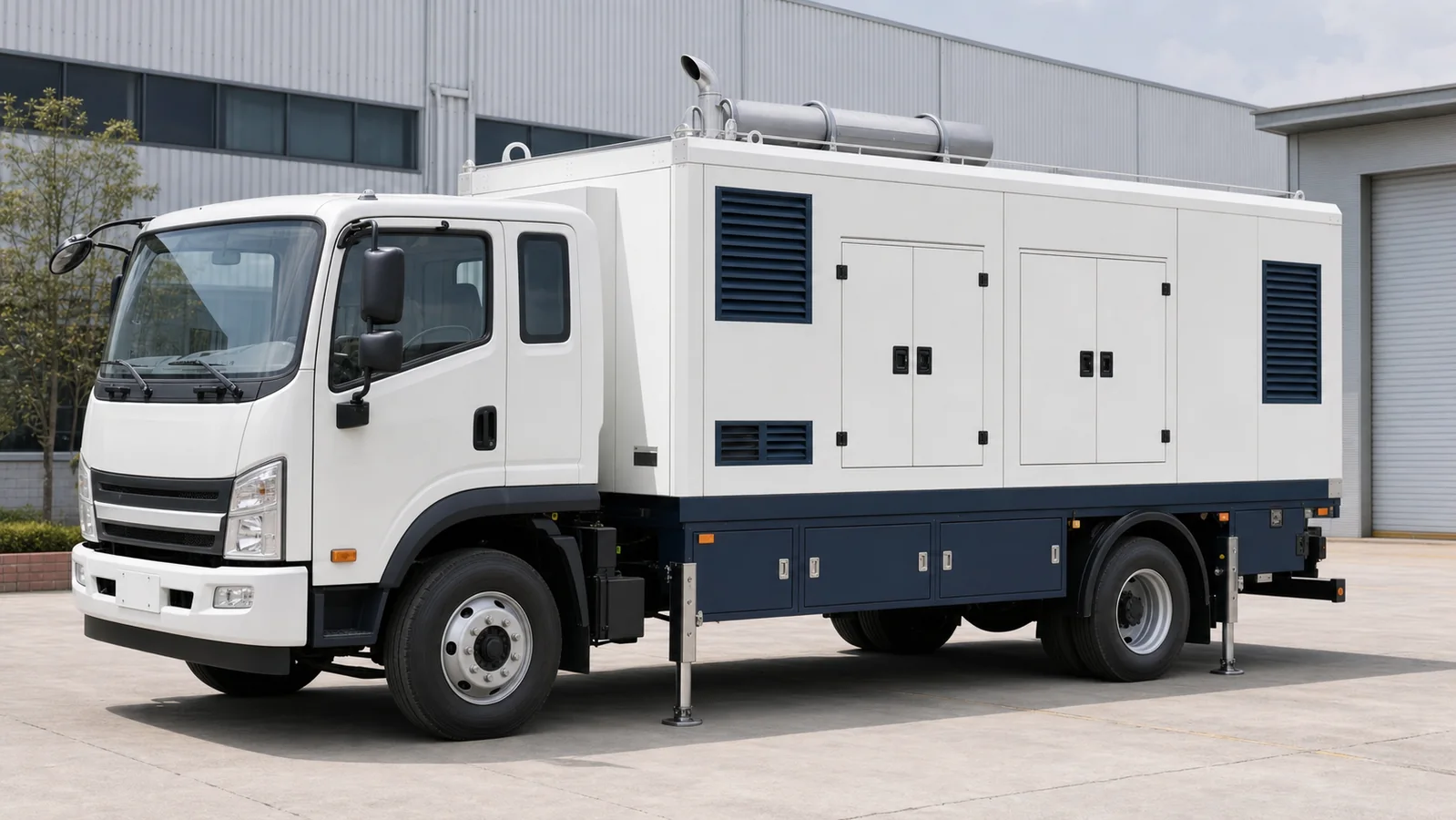
Gross vehicle weight, wheelbase, front/rear axle load and equipment layout determine road access, braking and operating stability.
Base frame, isolators and transport restraints must withstand road shock while limiting operating vibration in the vehicle body.
Intake, discharge, hot-air separation and exhaust location must satisfy full-load cooling, personnel safety and vehicle-envelope limits.
Main breaker, outgoing feeders, quick connections, phase-sequence checks, protection and emergency stop are configured around typical missions.
Cable size, length, reels, connectors and handling method directly affect connection speed and crew workload.
Interior lighting, workbench, tools, insulated equipment and personnel access support nighttime and adverse-weather missions.
Fuel autonomy, refueling route, fire equipment, leak control and safety markings must serve both road and field environments.
Run hours, alarms, load, fuel level and maintenance history support fleet readiness and post-mission review.
Six Mission Inputs
Define service radius, monthly mission frequency, road classes, climate and allowable preparation time.
List equipment to be supplied, maximum simultaneous demand, motor starting, UPS or variable-speed drives and recovery priority.
Confirm 50Hz/60Hz, voltage and phases, main breaker, terminals or plugs, cable length, voltage drop and grounding method.
Check chassis source, gross weight, overall dimensions, brakes, lighting, registration, conversion responsibility and driver licensing.
Reserve vehicle position, exhaust path, personnel isolation, cable route and distribution connection so the vehicle can operate on arrival.
Define runtime, refueling, driver and electrical personnel, inspections, spare parts, communications and return-to-readiness after each mission.
Choosing the Mobile-Power Format
| Comparison | Truck-Mounted Power Station | Trailer-Mounted Set | Fixed Acoustic or Containerized Set |
|---|---|---|---|
| Movement | Includes its own cab with generation and work systems integrated on a purpose-built vehicle. | Towed by a matched vehicle; generator and tow vehicle can be used independently. | Remains in place after installation and is not designed for frequent road moves. |
| Primary value | Rapid dispatch with distribution, cables, lighting and tools kept mission-ready onboard. | Flexible investment and scheduling, with one set towable by different vehicles. | A stable, complete arrangement for fixed capacity, fuel, distribution and maintenance. |
| Confirm first | Vehicle compliance, axle load, body airflow, onboard distribution, crew space and mission workflow. | Tow vehicle, gross weight, brakes, leveling, grounding and field connection. | Foundation, acoustics, airflow, exhaust, fuel, ATS and fixed interfaces. |
| Typical missions | Public emergency response, utility repair, specialist support and frequent multi-site service. | Construction, maintenance transitions, events and moderate-frequency multi-site deployment. | Hospitals, data centers, factories, hotels and fixed equipment areas. |
Typical Project Tasks
The vehicle brings distribution and cables to site, then connects loads by priority after isolation, grounding, phase checks and staged energization.
Standardized interfaces, cables and operating steps reduce time lost sourcing tools and assembling temporary distribution.
A standard vehicle layout, operating records, spare parts and remote monitoring improve consistency and return-to-readiness.
Typical configurations · Not the complete range
The range is not limited to the models below. These examples show common outputs, brand combinations and package choices; refer to the series overview for full coverage and available options.
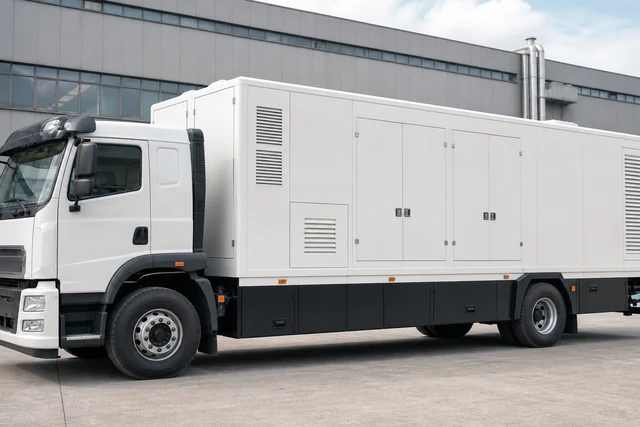
A compact 100 kW power truck for frequent response, rapid arrival and smaller sites.
View this configuration →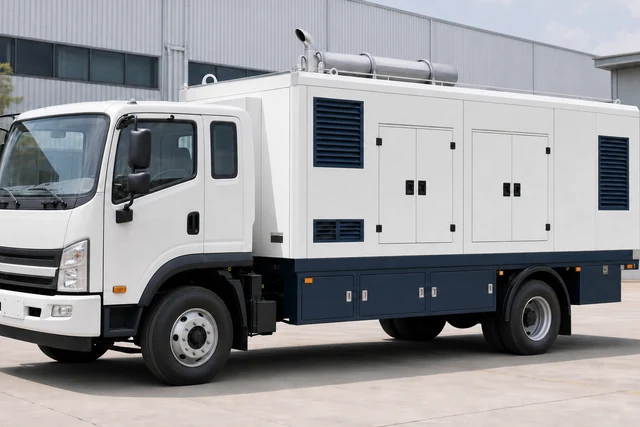
A 400 kW power truck integrating generation, outgoing feeders, cable management and monitoring.
View this configuration →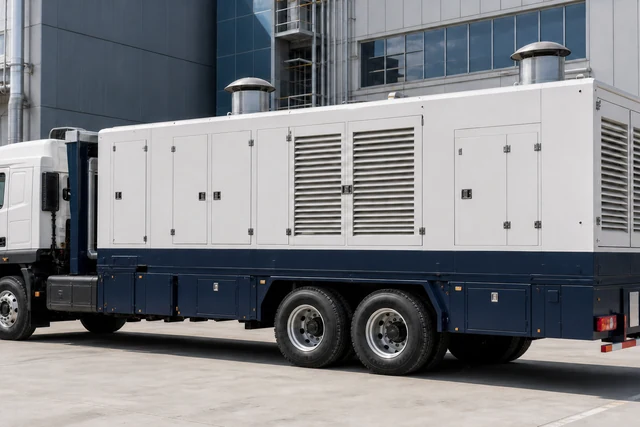
An 800 kW multi-axle power truck integrating rapid response, high output and complete distribution.
View this configuration →Share the country and city, response mission, critical loads, rating, voltage and frequency, service radius, road conditions, runtime and onboard functions. HOHANK engineers will define generator, chassis, body and distribution scope.