Typical Project Configuration · Customizable Range · 200kW

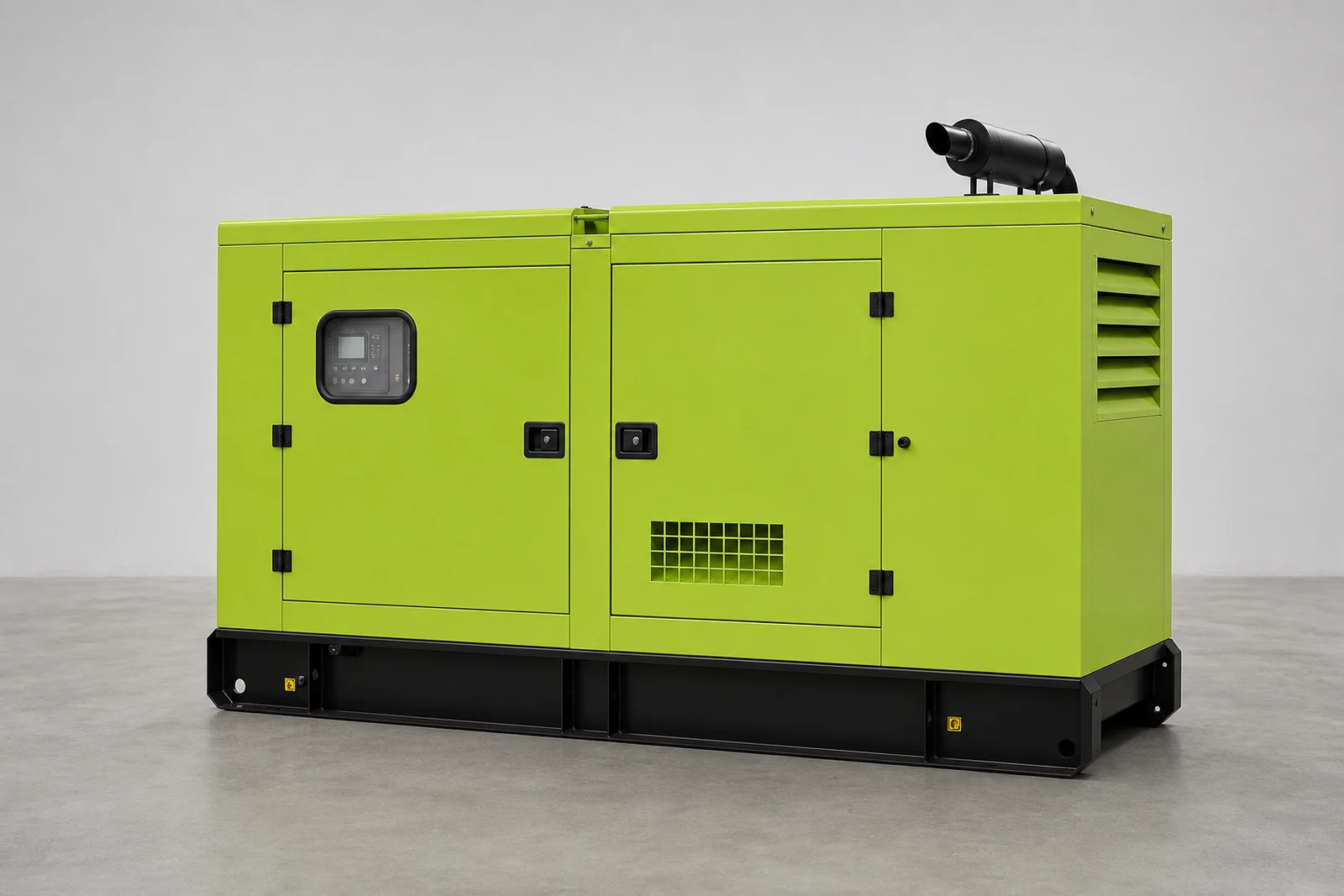
200 kW Cummins Sound-Attenuated Diesel Generator

For outdoor backup at hotels, schools, commercial facilities and small-to-medium factories, combining an established engine platform with acoustic treatment and service access. Motor starting, site noise and runtime determine the final package.

200 kWCummins engineAttenuated airflowCommercial and factory backup

Product photos · Typical configuration

Configuration overview

Typical 200 kW Cummins sound-attenuated generator for hotels, schools, commercial facilities and factory auxiliaries, covering key parameters, noise and service boundaries.

Reference output
200 kW / 250 kVA @ PF 0.8
Package format
Weatherproof sound-attenuated enclosure
Engine platform
Cummins
Alternator
Project-selected alternator
Frequency and speed
50Hz / 1500rpm · 60Hz / 1800rpm
Electrical output
Three-phase, four-wire · Project voltage

This page presents one typical project configuration to explain output, brand combination, package format and system interfaces. The same range covers additional outputs and options; the final engine model, rating, voltage, controller, tank, dimensions and supply scope are defined for the project.
Applications

Recommended applications and package choice

Recommended for

For medium-capacity projects needing outdoor placement and established engine support

Can support hotel services, campus facilities, commercial buildings and factory auxiliaries, together with ATS, low-voltage distribution, day tanks and remote monitoring.

Consider another package

Motors, chillers and pumps require a starting-step and transient review

A 200 kW load total is not enough to confirm selection. Maximum coincident load, starting sequence, allowable voltage dip, alternator excitation and enclosure cooling margin must be checked.

Typical application
Hotel and campus support systems
Typical application
Critical commercial-building auxiliaries
Typical application
Outdoor backup for small-to-medium factories

Core configuration

Four core configurations behind reliable operation

01

Engine and enclosure cooling

The engine, radiator and enclosure airflow are matched to output and ambient conditions, with hot-air recirculation, pressure loss and exhaust backpressure checked so attenuation does not reduce loaded capability.

02

Alternator and load response

The alternator is selected for motors, chillers, pumps, UPS and other loads, including excitation, insulation and temperature rise; PMG and the final brand or model are documented where required.

03

Acoustic enclosure and airflow

The enclosure specification defines steel, forming and welding, coating, perforated inner panels, flame-retardant acoustic material, seals and attenuated airflow, with locks, hinges and lifting points included in inspection.

04

Controls, fuel and service interfaces

Controller, emergency stop, alarms, grounding, base tank, external fill, access doors and lifting or drag interfaces determine day-to-day operation and maintainability.

Key parameters

Parameters used for project selection

These are the parameters that shape selection and interfaces. Fuel consumption, noise and dimensions are supplied after the engine model, load factor and site environment are defined.

Reference output200 kW / 250 kVA @ PF 0.8
Rating basisPrime/standby rating confirmed against the final engine model, ISO 8528 conditions and project duty
Engine / alternatorCummins engine / Project-selected alternator
Frequency / voltage50 Hz / 1500 rpm or 60 Hz / 1800 rpm; 380–480 V and other project voltages
Reference noiseSeries-manual reference: 75–80 dBA at 7 m; final value depends on output, airflow, attenuation and test conditions
Reference dimensions3800 × 1300 × 1950 mm (same-output manual reference); final dimensions follow the selected package
Reference fuel tank270 L (same-output manual reference); verified against target runtime and usable volume
Enclosure / controlsWeatherproof acoustic enclosure; DSE / ComAp / SmartGen controls selected for ATS, paralleling and communications

Quality and delivery

Delivery evidence from components and structure to testing

01

Nameplates and BOM

Engine, alternator, controller and breaker brands, models and serial information are listed in the technical and delivery documents.

02

Structure and workmanship

Base steel, welds, fasteners, mounts and coating are included in manufacturing inspection; container packages also cover doors, hinges, locks, seals and lifting points.

03

Cooling and electrical

Radiator, airflow, wiring terminations, grounding, protection and safety separation support loaded stability and long-term serviceability.

04

Factory-test records

Factory records can cover starting, no-load and staged-load operation, voltage, frequency, alarms and protection, with witnessed FAT available by project.

Project configuration

Optional systems and project inputs

Optional systems

  • ATS transfer and low-voltage distribution
  • Paralleling, N+1 and future expansion
  • Base tank, day tank and automatic transfer
  • Remote monitoring, communications and records
  • Breaker, charger, heaters and spares package
  • Special voltage, hot/high-altitude and corrosion protection

Information needed for an accurate proposal

  • Critical-load list, maximum simultaneous load and starting sequence
  • Prime/standby duty and expected annual operating hours
  • Country, frequency, voltage, grounding and grid boundary
  • Temperature, altitude, dust, salt exposure and noise target
  • Fuel runtime, refueling route and fire requirements
  • Transport, lifting, foundation, installation and FAT/SAT responsibility

Ask an engineer to verify this package against the real loads

Provide the country and city, load list, frequency, voltage, duty, installation environment and required delivery. A HOHANK engineer will verify output, component selection, interfaces and the supply boundary.

Get Engineering Support