Mine dewatering pump backup power

Mine dewatering pump backup power

For open-pit mines, underground mines, tailings pumps, water treatment, rainy-season dewatering and safety loads, configure gensets, ATS, low-voltage distribution and critical-load backup.

Mine dewatering pump backup power

Dewatering pump backup power

Pumping and drainage are often safety-critical loads and need to be incorporated into protected loads rather than ordinary auxiliary equipment.

Scene background

Drainage, tailings and safety loads cannot be treated the same as ordinary production loads.

The electricity risks of open pits, underground working surfaces, tailings systems and water treatment stations are different from those of ordinary production equipment. Stopping the crushing line will affect production, and stopping the drainage pump may cause water accumulation, safety, environmental protection, and recovery difficulties.

Many sites initially put pumps, lighting, camp loads and production equipment on the same power source. It may work on normal days, but rain, outages or voltage swings can let ordinary loads drag down safety-critical loads.

Site problem

Once the water pump stops, the site will not produce less, but the risk will rise rapidly.

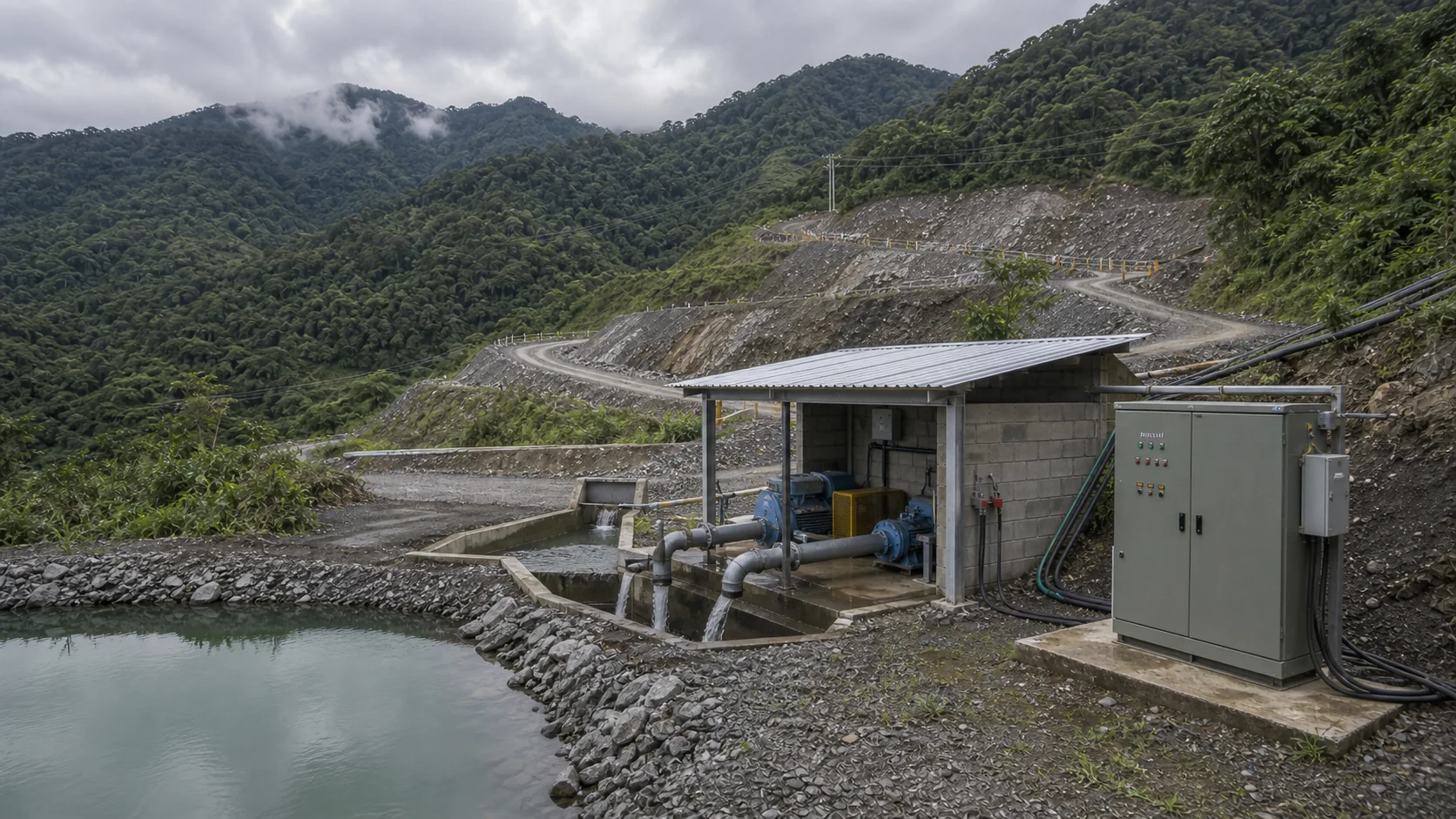
The biggest concern for the person in charge of mine operations is that the pump cannot automatically recover during a power outage, or the voltage is unstable when the pump is restarted. Water accumulation in open-pit mines, interruption of drainage at underground working surfaces, and shutdown of tailings pumps will all put the site into a passive treatment state.

On-site crews may have to switch power in the rain, check pump control cabinets, deploy temporary generator sets, and keep lighting, communications, and safety equipment online. A power issue can quickly become a safety and production-coordination problem.

Mine drainage pump backup power on-site issue scenario

Operational consequences if left unresolved

Ignoring dewatering backup increases shutdown, equipment damage and recovery cost

Once the pumping and drainage system is shut down for a long time, water accumulation may affect roads, pit bottom equipment, underground working surfaces and electrical cabinets. Restoration not only involves restarting the pump, but also dealing with silt, damp, cable and control system risks.

Loads such as tailings, water treatment, and ventilation may also create regulatory and site safety pressures if they lack backup power. This problem cannot be solved only by temporary repairs, but protected loads need to be defined in advance.

Recommended configuration

Treat dewatering as a critical load with dedicated backup power

Key pumps, pump control cabinets, necessary lighting, control signals and communications should be separately classified into the backup power range, and prioritized with ordinary loads such as crushing, maintenance workshops, and campsites. In the event of a power outage, which pumps will be protected first and which pumps will be started later must be clearly stated on the distribution side.

Standby diesel generator sets, ATS, pump starting-current review, weatherproof distribution, long-runtime fuel, and key spare parts should be planned as one dewatering backup-power package. A pump station needs a clear transfer sequence after an outage, not just a generator set that can be temporarily connected.

Configuration confirmation steps

Delineate critical pumps and review startup, switchover, and long-term operation

Separate pump groups by risk: pit drainage, underground faces, tailings, water treatment, and fire-fighting loads should be reviewed one by one, with pump power, starting method, control cabinet location, rainy-season water volume, and manual restart difficulty recorded.

Check backup genset capacity, ATS coverage, and pump startup order. Multiple pumps should not be assumed to start together, and the pump station should not compete with lighting, camp, or maintenance loads for the same standby capacity.

Build rainy-season conditions into the design. Confirm weather protection for distribution cabinets, fuel-tank runtime, duty coverage, spare contactors, and sensor stock before water levels rise, not after the pumps stop.

Expected operational benefit

During an outage, protect pump and control loads first so site recovery is more controlled

When utility power or the main supply is abnormal, critical pumps can switch to backup power by priority and ordinary loads can release capacity. The site no longer has to maintain drainage through manual cable pulling and ad hoc decisions in the rain.

What the team received was a drainage and power guarantee list: the required pump set, backup power coverage, fuel life, on-duty actions, common spare parts locations and abnormal reporting sequence were all fixed in advance.

Information to confirm before quotation

Common site signals

  • Open pits or underground operations have a high risk of water exposure
  • The pump must continue to operate during rainy seasons or power outages.
  • Difficulty in recovery after stopping the pump for a long time
  • Pump control system is in a humid or remote area

If this is not planned early

  • A power outage can put drainage, tailings, water treatment or ventilation loads into a passive processing state
  • It is difficult to restart the pumping station, and water accumulation may affect roads, equipment and working surfaces
  • Manual power-source switching in the rain increases safety risk and recovery time.
  • Critical pumps and ordinary loads compete for the same set of spare capacity, and the protection priority is unclear
  • Lack of long-term fuel and spare parts plans, and recovery from shutdowns in rainy season is slower

Project confirmation points

  • Which pumps, control cabinets, lighting and communications are safety critical loads?
  • Pump power, starting method, number of simultaneous starts and restart difficulty
  • Rainy season water volume, continuous operation time and on-site duty requirements
  • ATS switching range, spare capacity and common load isolation method
  • Rain and moisture-proof conditions of pump station, fuel tank configuration and key spare parts inventory

Recommended equipment scope

  • Configure dedicated backup generators for critical pumps
  • ATS and critical load prioritization
  • Review pump starting current
  • Planning fuel for long-term operations
  • Rainproof, moistureproof and key spare parts configuration

Engineer assistance

Contact an engineer first, then review the equipment and service scope together

Are dewatering, tailings, water treatment, or ventilation loads safety-critical loads that cannot wait after an outage?

Equipment and module scope

Backup diesel generator set, ATS automatic switching, rainproof distribution, pump start review, long-term fuel and critical spare parts.

Information engineers will help organize

  • Pumping station power, quantity and starting method
  • Rainy season operation time and drainage priority
  • Photos of existing control boxes, piping areas and wet environments
  • Allowed interruption time and backup time after power outage

Related equipment and service

Standby diesel generator setATS transferRainproof low-voltage distributionFuel autonomyKey spare parts package

Engineer contact

Contact an engineer to review the right configuration.

If the information is incomplete, contact an engineer first. Start with the mine location, the site problem or the general equipment condition; the engineer will organize the loads, site conditions and configuration scope with you.

Scan WhatsApp to contact an engineer

An engineer will contact you soon to review your site issue and needs.

Scan WhatsApp to contact an engineer WhatsApp: +86 176 8575 2779
Email an engineerfeyqiao@hohank.com
or leave your contact information

An engineer will contact you soon to review your site issue and needs.

High-voltage mine buses and long-distance distribution

For 6.3kV or 10.5kV buses, long cable runs or large unit capacities, a high-voltage generator system reduces current and line losses while integrating switchgear, grounding and paralleling.

Get high-voltage engineering support
Email engineer