Lower current and cable burden
Compared with 400V distribution at the same power, 6.3–11kV greatly reduces line current, limiting conductor size or parallel cable runs and easing busbar and breaker current duty.
Mining products / high-voltage power
For large capacities, long cable runs and existing 6.3–11kV mine buses, direct high-voltage generation lowers distribution current, cable losses and voltage drop while integrating switchgear, paralleling and grounding.
Why high voltage
In a three-phase system, raising voltage lowers current for the same transmitted power. This changes cable, switchgear and loss requirements when mine loads are large, remote or already connected to a 6.3kV or 10.5kV bus.
Compared with 400V distribution at the same power, 6.3–11kV greatly reduces line current, limiting conductor size or parallel cable runs and easing busbar and breaker current duty.
Conductor losses rise with current squared. Lower current helps control I²R losses, heating and voltage drop on long mine feeders.
Where 6.3kV or 10.5kV buses, pumps, crushers or hoists already exist, generation at the same voltage reduces temporary step-up stages and interface complexity.
Large single sets or parallel plants can coordinate synchronization, sectionalizing, protection and redundancy on the high-voltage side for continuous production and staged expansion.
For smaller capacities, short cable runs and predominantly 380V, 400V or 440V loads, a low-voltage system is usually simpler. High voltage is selected for capacity, distance, existing bus voltage and load voltage—not because higher voltage is automatically better.
System configurations
From a single emergency set to a redundant multi-set plant, generation, protection and site interfaces share one voltage architecture.
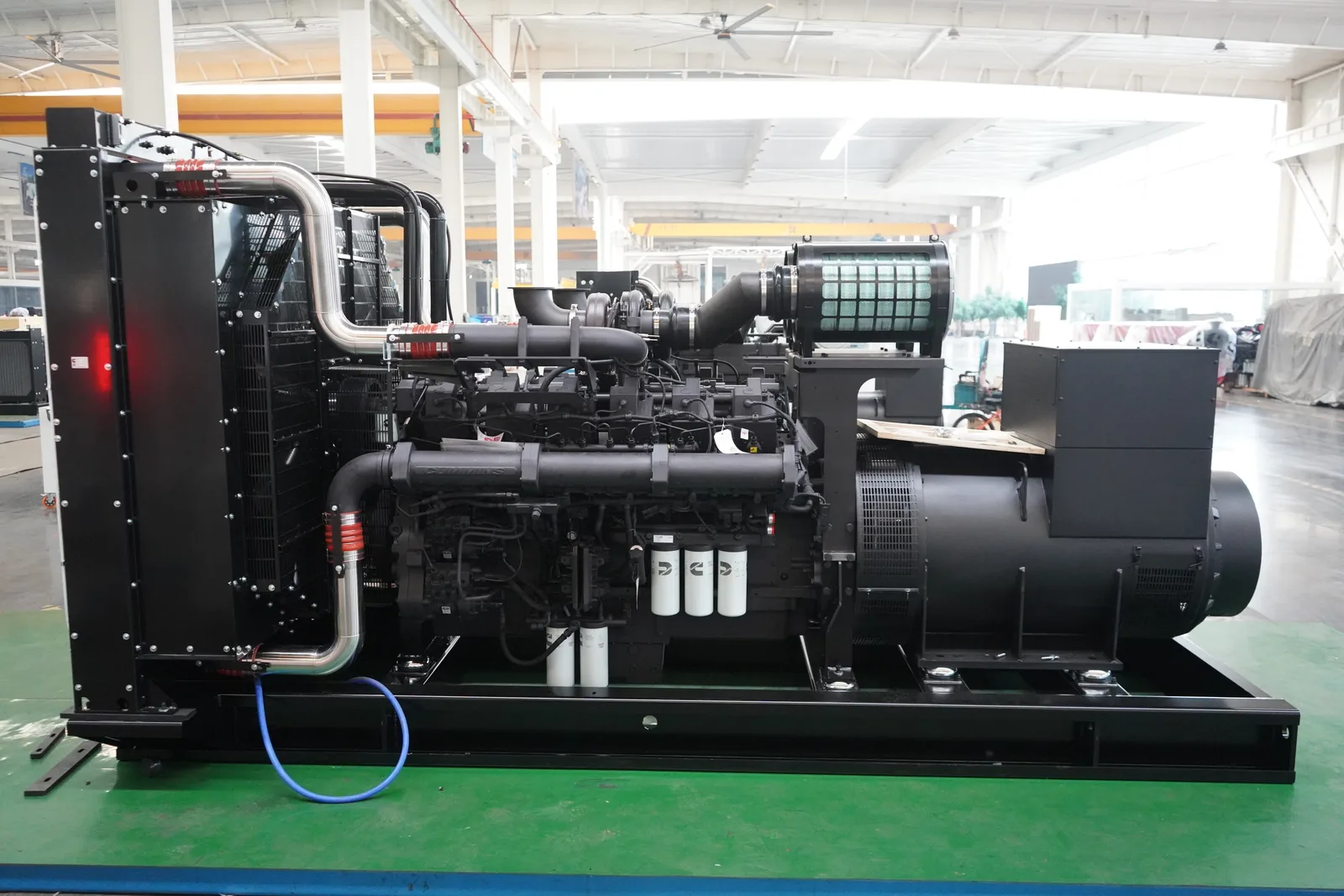
High-voltage main or emergency power for dewatering pumps, hoists and individual process lines.
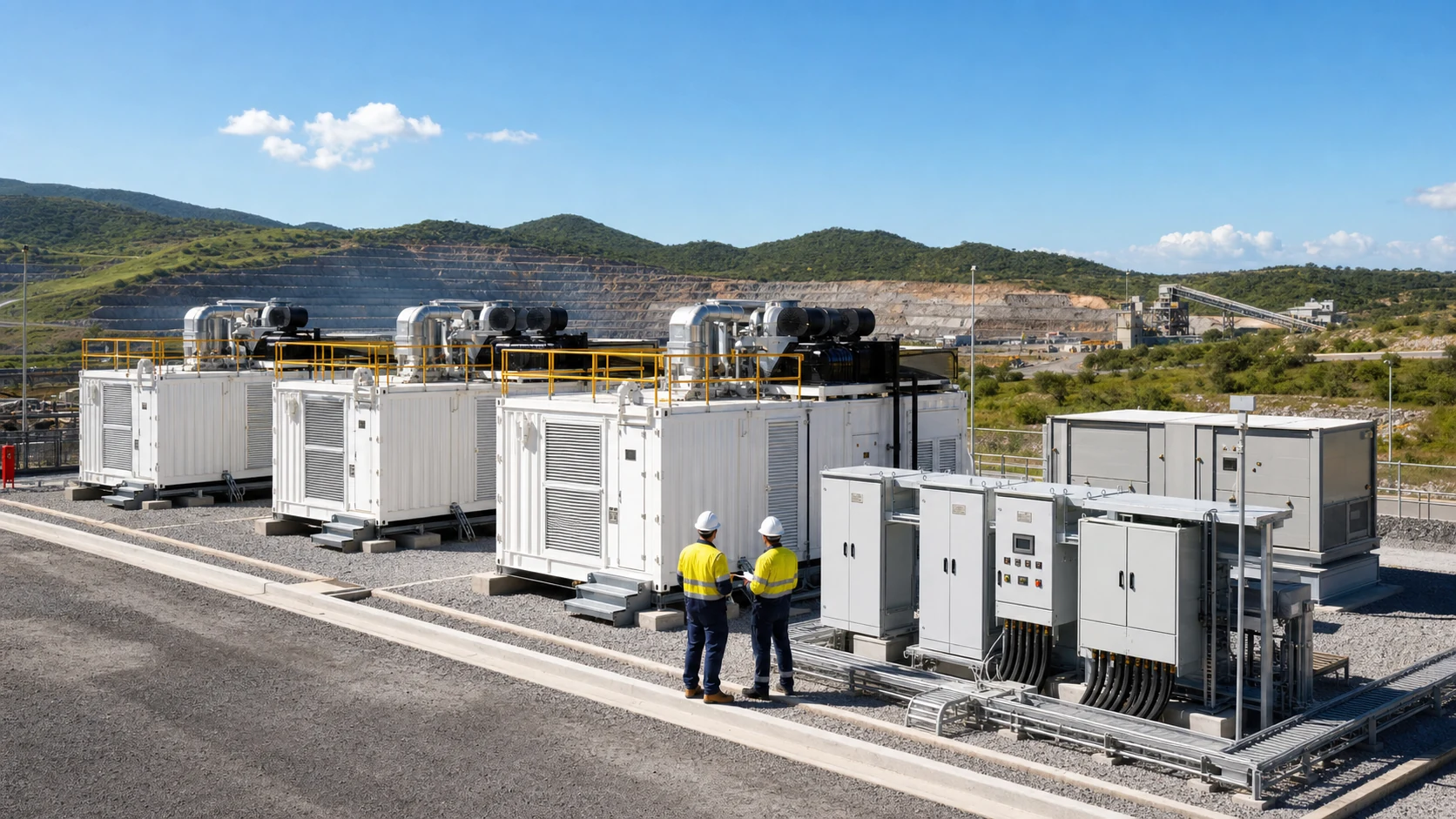
For large loads, staged expansion and N+1 redundancy with synchronization, load sharing and automatic dispatch.
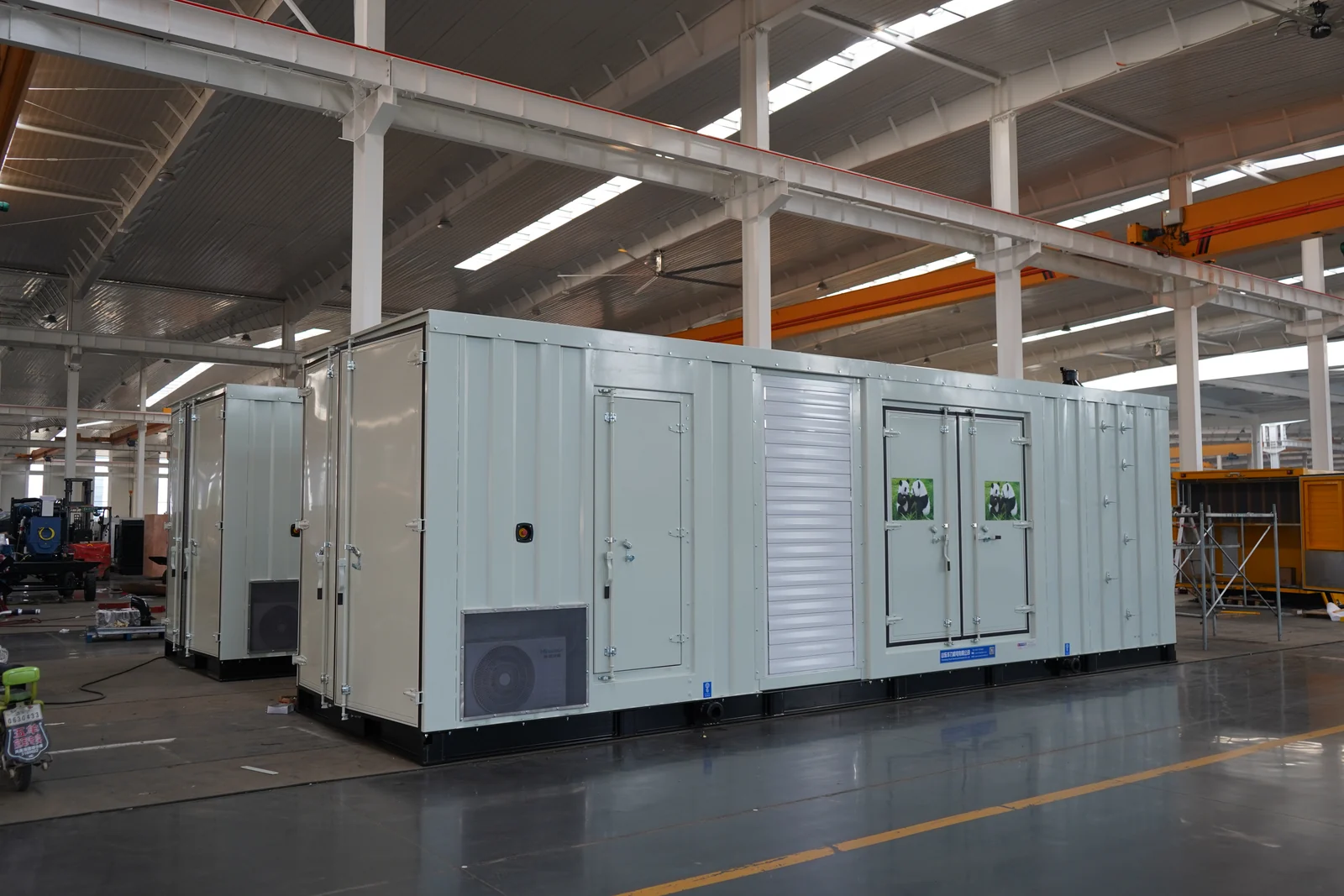
Generation, control and distribution in protected enclosures for dust, rain, remote sites and integrated transport.
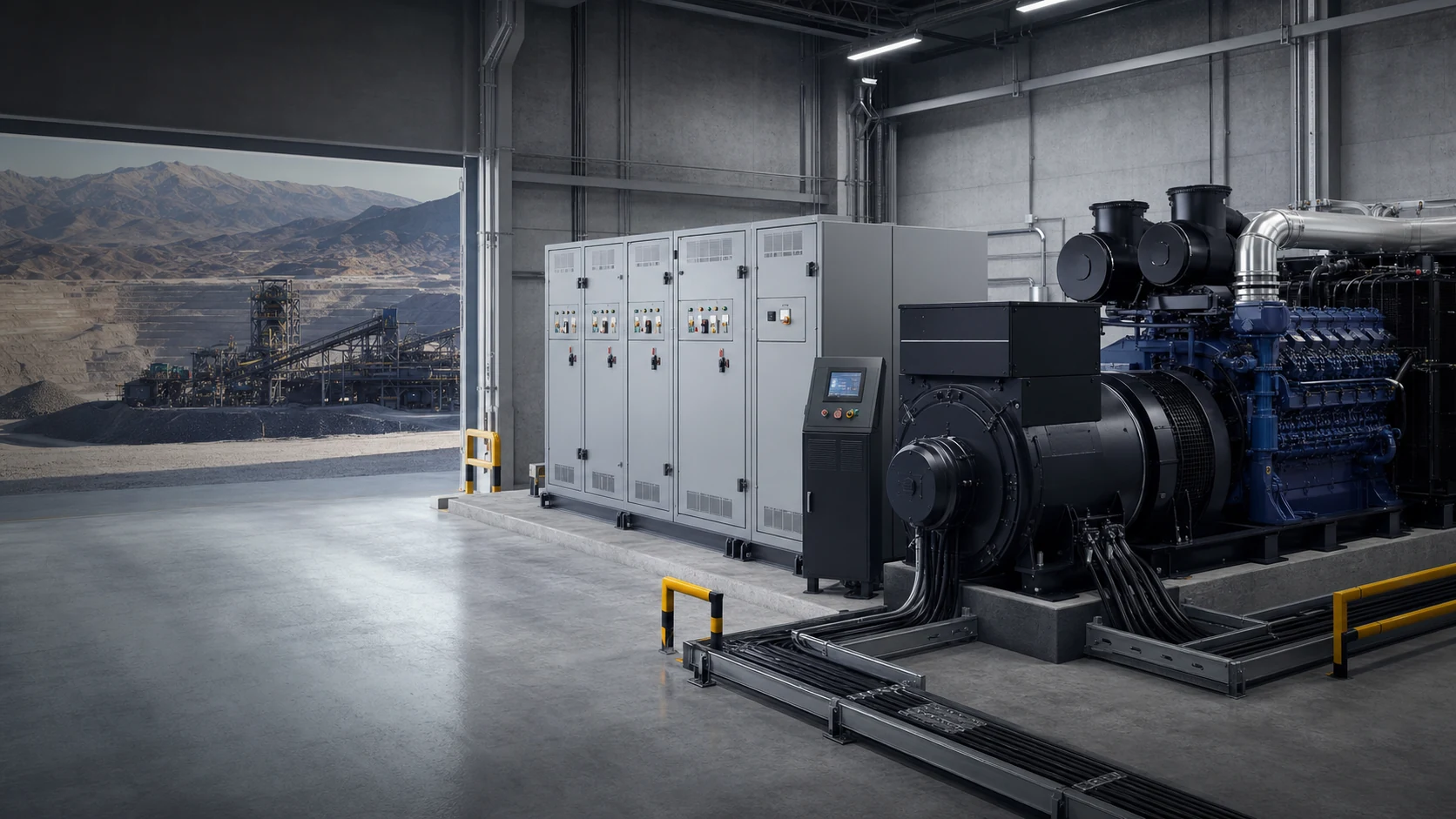
For shared mine backup, mobile emergency duty and sites with different bus voltages.
Power and engines
Power bands support early project planning. Final capacity is based on starting current, coincident loads, altitude and redundancy.
Dewatering stations, auxiliary process lines and local high-voltage backup.
Hoisting systems, processing equipment and medium production zones.
Large crushing lines, multi-zone distribution and expansion plants.
For critical loads and emergency systems with high reliability targets.
Broad coverage for mine main, standby and parallel packages.
Wide capacity coverage for large loads and expansion systems.
Complete power system
Every module is aligned with the site bus, cable route, protection philosophy and operating mode.
Engine, high-voltage alternator, governing, excitation and set control.
Metal-clad or compact switchgear, breakers and safety interlocks.
PT/CT sensing, synchronization, load sharing and automatic dispatch.
Neutral grounding, reverse-power absorption and DC control power.
Interfaces for different bus voltages and mobile emergency connection.
Operating data, alarms, event history and maintenance reminders.
Quality evidence
Every proof point supports service life, operator safety and maintainability.
Core components are selected around duty, altitude, operating hours and service access, with a clear bill of materials.
Compartments, breaker trucks, grounding switches and anti-misoperation logic are part of the electrical design.
Factory tests cover target voltage, load capability, step loading, protection actions and paralleling logic.
Delivery includes key settings, drawings, test records, training and recommended spares.
Share bus voltage, critical loads, starting method, operating hours, altitude and installation location. Engineering will define generator capacity, switchgear, paralleling and protection scope.