Remote mine diesel fuel cost control

Remote mine diesel fuel cost control

For remote mines with long-term self-generation and fuel transport cost, review fuel consumption, load rate, day tank, bulk tank, refueling route, unit rotation and total operating cost.

Remote mine diesel fuel cost control

Fuel logistics and operating costs

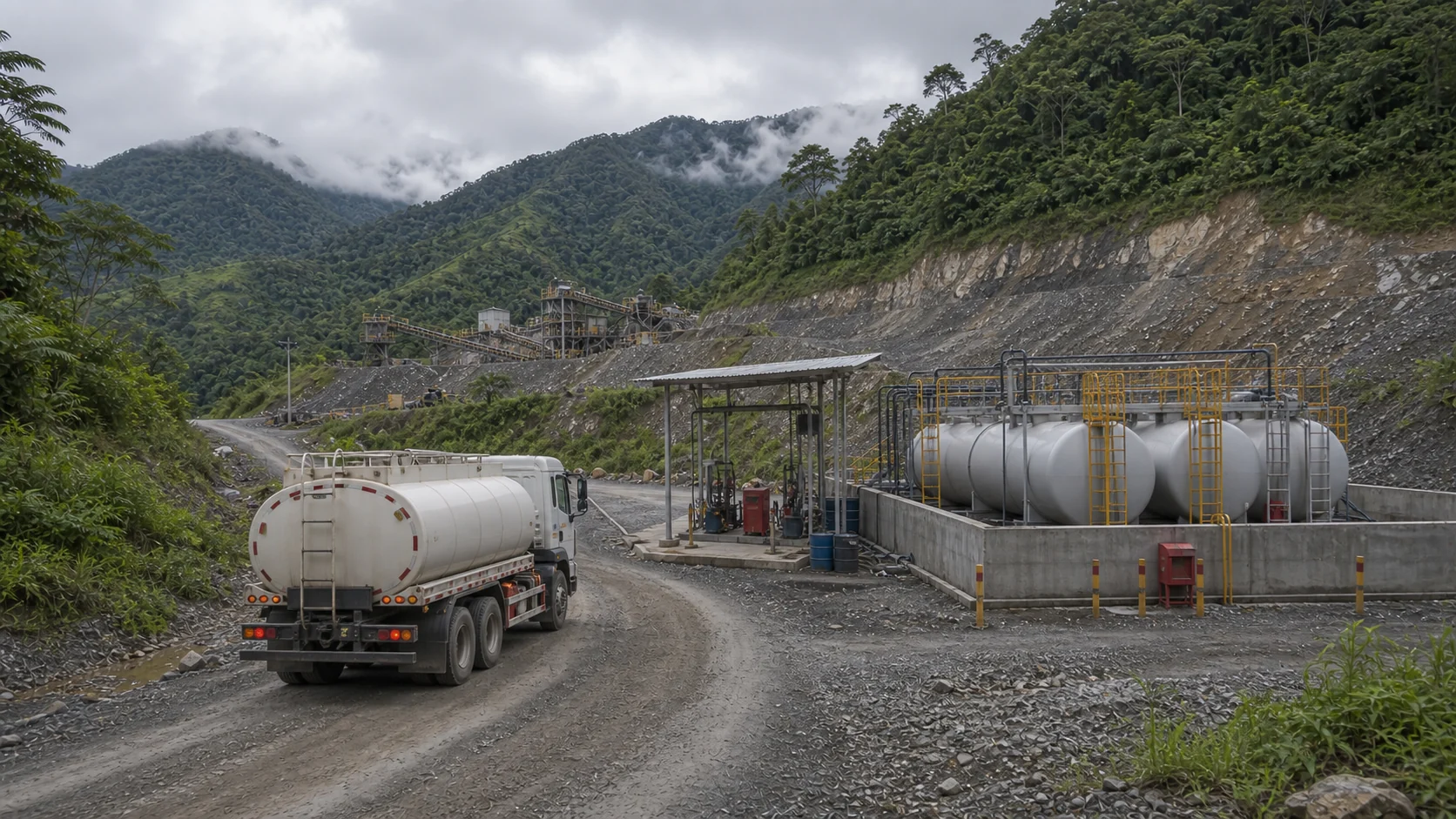
For remote mines, fuel logistics can become a major operating cost. The power plan must take into account fuel storage, load profile and efficiency.

Scene background

For remote mines with long-term self-generation, cost is not decided only on the day the generator set is purchased

If an off-grid or remote mine relies on diesel generation for the long term, fuel transport, refueling organization, low-load operation, maintenance, and spare parts all affect power cost. A cheap generator set does not always mean cheap electricity.

Many sites initially focus only on purchase price and rated power. After the generator set runs continuously, fuel consumption, refueling frequency, transport roads, day tanks, and maintenance planning become the long-term pressure.

Site problem

The generator set is running, but diesel supply, maintenance, and refueling are all arranged ad hoc

Mine owners and operations managers often face the same pattern: generator sets burn too much fuel at low load, diesel trucks are affected by roads and weather, the site lacks clear daily or weekly fuel estimates, and refueling plans keep chasing the remaining stock.

When maintenance is also unplanned, minor failures and refueling can compound into outages. There appears to be a power generation system on site, but actual operation relies on temporary coordination, making costs and downtime risks difficult to control.

Diesel power generation fuel consumption control in remote mine sites On-site issue scenarios

Operational consequences if left unresolved

Confusing fuel planning will push up the cost of power generation and the risk of outage.

If the generator set runs inefficiently for a long time, diesel consumption will keep rising. In remote areas, every refueling trip involves transport, roads, weather, inventory, and safety management; if any link gets stuck, power for production and the camp is affected.

Missing fuel-consumption estimates also affect procurement decisions. Fuel tank capacity, generator set rotation, staged load operation, and diesel, solar, and energy-storage combinations all need to be calculated against actual site operating conditions.

Recommended configuration

Plan fuel, loads and running hours in one power system

Start with the load curve to calculate daily and weekly fuel consumption, then work back to the day tank, bulk fuel tank, refueling route and on-site safety stock. Generator capacity, number of running units and load grouping should be adjusted around the real load factor to avoid running an oversized unit at light load for long periods.

Long-term off-grid sites also need to put unit rotation, remote monitoring, maintenance cycles and hybrid energy assessment into the same operating table. There must be executable arrangements for when diesel vehicles will enter the site, when which unit will be maintained, and whether to switch to a smaller unit when the load is low.

Configuration confirmation steps

Use fuel-consumption estimates to set tank capacity, unit rotation, and monitoring

Start with a fuel baseline that operations, procurement, and site duty teams can all use: main loads, operating hours, shifts, seasonal demand, current generator fuel consumption, and the diesel delivery cycle.

Use that baseline to size the day tank and bulk fuel tank, then check fuel-truck access, unloading safety, rainy-season road conditions, and any limits on night refueling so fuel logistics do not become the next shutdown risk.

Then arrange generator-set rotation or staged operation around load changes, using operating hours, load factor, fuel consumption, and alarm records to decide whether to adjust the number of generator sets, add a smaller generator set, or review diesel + PV + storage.

Expected operational benefit

Long-term self-generation no longer relies on guesswork refueling, so operating cost is easier to control

After the operation plan is implemented, the mine site can estimate diesel consumption by shift and know what the minimum safety stock is, which unit is mainly operating, which unit is rotated, and which unit is only connected during peak load or failure.

Fuel is no longer just temporary coordination between the warehouse and drivers. It should be managed with load rate, maintenance hours, spare-parts readiness, and rainy-season road access, so generation cost can be traced to specific causes.

Information to confirm before quotation

Common site signals

  • Diesel transportation distance is long
  • Long-term low-load operation of the generator set
  • No clear daily or weekly fuel consumption estimates
  • Fuel storage and refueling channels are not planned

If this is not planned early

  • Long-term inefficient operation will continue to increase diesel consumption
  • The refueling plan chases the inventory. Rainy season or road problems will amplify the risk of downtime.
  • The passages for daily fuel tanks, large fuel tanks and fuel trucks are not clear, and it is easy to coordinate on site temporarily.
  • Without load-factor and operating-hour monitoring, you cannot tell whether the generator set is running inefficiently
  • Maintenance, spare parts and fuel supply are superimposed, making power costs difficult to control.

Project confirmation points

  • Main loads, shifts, daily operating hours and seasonal load changes
  • Existing unit fuel consumption, load factor, operating hours and maintenance records
  • Diesel transportation cycle, road conditions, impact of rainy season and entry and exit routes of refueling vehicles
  • Daily fuel tanks, large fuel tanks, safety stock and on-site oil storage requirements
  • Whether generator-set rotation, staged operation, or diesel + PV + energy storage should be evaluated

Recommended equipment scope

  • Estimated fuel consumption based on load curve
  • Planning daily fuel tanks and large-capacity fuel tanks
  • Optimize the load and perform hierarchical operation of the unit
  • Remotely monitor operating hours and load rates
  • Evaluate diesel + photovoltaic + energy storage in suitable scenarios

Engineer assistance

Contact an engineer first, then review the equipment and service scope together

When the mine site generates self-generated power for a long time, have the diesel consumption, refueling cycle and load rate been included in the equipment configuration?

Equipment and module scope

Diesel generator sets, daily fuel tanks, large fuel tanks, fuel supply routes, operating-hour monitoring, generator-set rotation, and maintenance spare parts.

Information engineers will help organize

  • Daily operating hours and load profile
  • Diesel transportation cycle, road conditions and impact of rainy season
  • Daily fuel tanks, large fuel tanks and safety stock requirements
  • Existing unit fuel consumption, load factor and maintenance records

Related equipment and service

Fuel moduleDaily use/large fuel tankRunning hours monitoringCrew rotationMaintenance and Spare Parts Program

Engineer contact

Contact an engineer to review the right configuration.

If the information is incomplete, contact an engineer first. Start with the mine location, the site problem or the general equipment condition; the engineer will organize the loads, site conditions and configuration scope with you.

Scan WhatsApp to contact an engineer

An engineer will contact you soon to review your site issue and needs.

Scan WhatsApp to contact an engineer WhatsApp: +86 176 8575 2779
Email an engineerfeyqiao@hohank.com
or leave your contact information

An engineer will contact you soon to review your site issue and needs.

Email engineer